

To prevent a bath panel from peeling or rotting, you must choose the material based on the room’s usage. This is especially critical when deciding between a Straight Bath and a Shower Bath, as the amount of water “splash” varies significantly between the two.
MDF panels offer a solid, luxury furniture look; they are best for well-ventilated master bathrooms. However, they are prone to “blowing” if the edges aren’t sealed with silicone. Acrylic panels are 100% waterproof; they are virtually indestructible, making them the superior choice for a Shower Bath where daily overhead showering makes splashing inevitable.
In this blog, we will discuss everything you need to know when deciding between a Shower Bath or a Straight Bath and whether to pair them with MDF or acrylic panels.
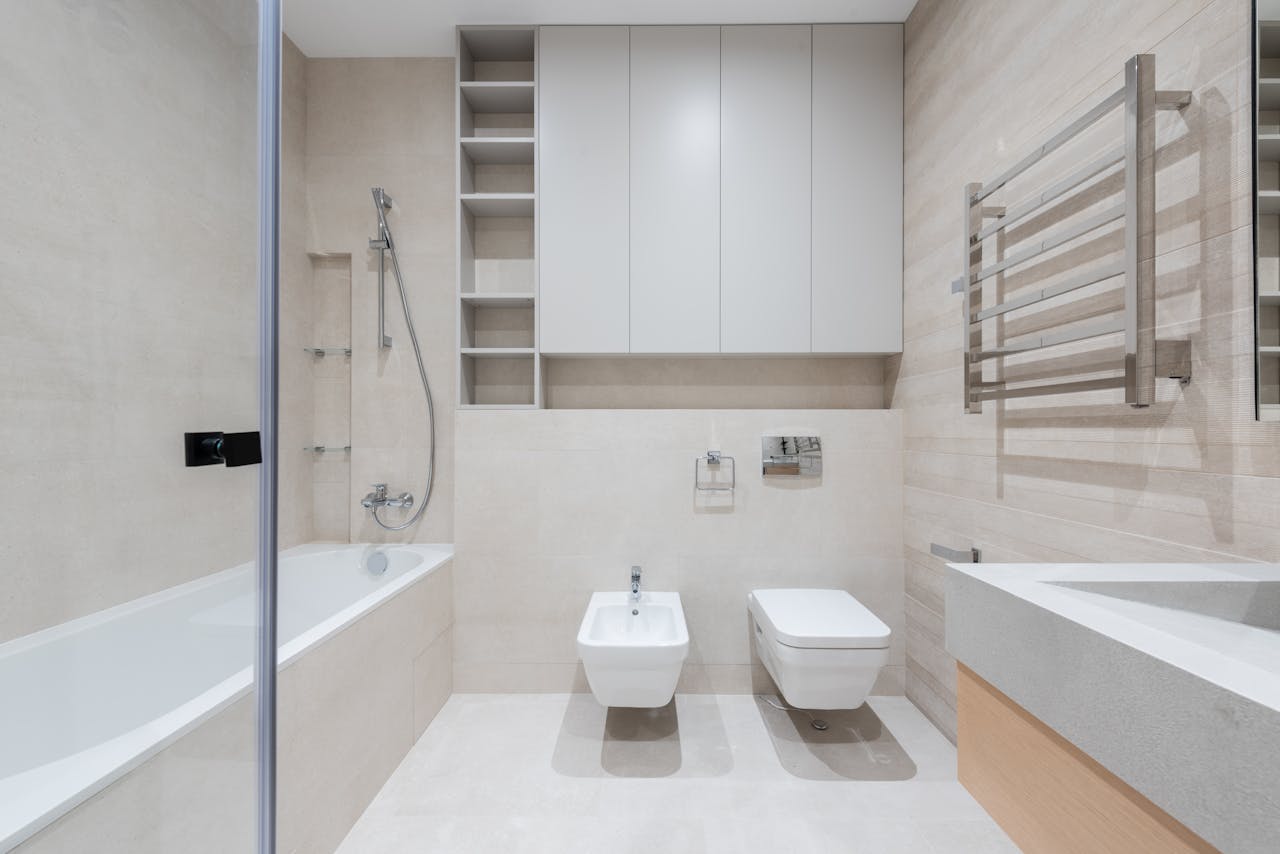
Why Your New Bathroom Might Look Old Too Soon
A new bathroom is a massive investment in the UK. Yet, despite the thousands of pounds spent on high-end tiles, the “6-month regret” usually starts with a single, humble item: the bath panel.
Whether you’ve installed a space-saving Straight Bath or a versatile Shower Bath, the panel is the most visible part of the unit. If it starts peeling, yellowing, or warping, it doesn’t just look ugly; it makes a beautiful, expensive renovation look like a budget DIY job.
1. Straight Baths with MDF Panels
If you want your Straight Bath to look like a permanent, architectural feature rather than a plastic tub, MDF (Medium Density Fibreboard) is the professional’s choice.
MDF panels are typically 15mm to 18mm thick. Unlike thin plastic, they don’t “flex” when you brush against them. This creates a solid, monolithic look that mimics expensive, built-in cabinetry. The biggest benefit of choosing an MDF panel for your straight shower baths is the ability to coordinate finishes with your vanity unit or storage cupboards, creating a seamless, cohesive design.
The downside of MDF is compressed wood. If water penetrates the protective laminate, the board will absorb it like a sponge. This leads to “blowing,” where the panel swells and the laminate peels.
2. Shower Baths with Acrylic Panels
In a busy UK household where a Shower Bath is the primary way the family gets clean, Acrylic Panels are often the only logical choice. Acrylic is a non-porous synthetic plastic that cannot rot, it cannot “blow,” and it cannot absorb moisture.
Because Shower Baths involve constant water spray from an overhead shower, the panel is frequently exposed to standing water. Acrylic panels are 100% waterproof and “zero-maintenance.” Furthermore, because acrylic is slightly flexible, it is much easier for a fitter to trim around tricky skirting boards or uneven floors than a rigid, heavy MDF board.
3. MDF vs. Acrylic: Which One Should You Buy?
| Feature | MDF Bath Panels | Acrylic Bath Panels |
| Material Feel | Heavy & Solid | Light & Flexible |
| Waterproofing | Moisture Resistant (Needs Sealing) | 100% Waterproof |
| Style Profile | Luxury Furniture Look | Clean & Practical |
| Best Paired With | Straight Baths (Low Splash) | Shower Baths (High Splash) |
| Durability | Vulnerable to “Blowing” | Virtually Indestructible |
4. The “Hidden Secret” to Stopping Rot for Good
Regardless of whether you choose a Straight Bath or a Shower Bath, the installation method is the most important factor in preventing leaks.
Most “6-month leaks” aren’t caused by the panel; they are caused by the bath flexing. Many homeowners buy a standard bath without checking the reinforcement. If a tub “bows” when you stand in it to shower, the movement snaps the silicone seal. Once that seal is broken, water runs behind the bath and eventually rots your MDF panel from the inside out.
The Pro Secret: Never seal your bath while it’s empty.
- Fill your Shower Bath or Straight Bath to the overflow with water.
- Apply your silicone sealant while the bath is at its lowest “settled” point.
- Keep the bath full for 24 hours while the silicone cures.
5. Maintain Your Bath Panel to Extend Its Lifespan
- For MDF Panels: Ensure your extractor fan is high-powered. Even “moisture-resistant” MDF will eventually fail if the room remains a sauna for three hours every morning. After using your Straight Bath, do a quick “wipe down” of the bottom edge.
- For Acrylic Panels: Avoid using abrasive cleaners. While they won’t rot the panel, they will create microscopic scratches that make the shower bath panel look dull and “aged.” A simple microfibre cloth and warm soapy water are all you need to keep your Shower Bath looking brand new.
The Verdict: Buy Once, Buy Right
If you want that “Quiet Luxury” aesthetic and the solid feel of a boutique hotel, invest in a Straight Bath with an MDF Panel. It will elevate the entire room and make your bathroom feel like a custom-built masterpiece.
However, if your bathroom is a high-traffic zone used for daily showering, stick to a Shower Bath with an Acrylic Panel. You will trade a tiny bit of “solidity” for decades of 100% waterproof peace of mind.