

Designing a Ring Remotely: What Works Over Renders and What Does Not
The option to design your own engagement ring online stopped being a compromise some time ago, but the way people talk about it has not caught up. It is still framed as the convenient version of a real process, something you settle for when there is no good workshop nearby. That framing is wrong in both directions. Remote design is genuinely better than in person at several things and genuinely worse at a few others, and the difference is predictable enough to plan around. Knowing which is which is most of what separates a remote process that works from one that produces a surprise at the end.
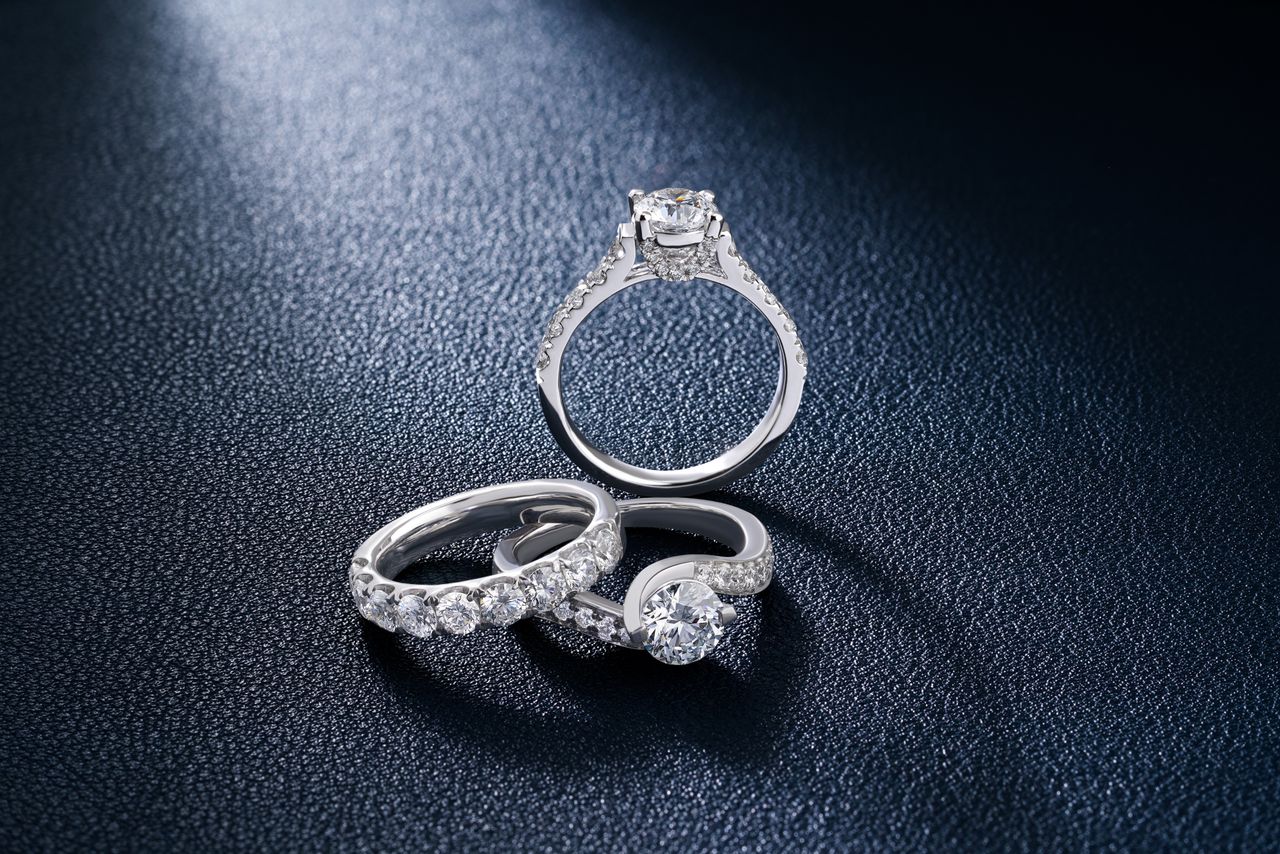
What a remote process actually is
Working with a jeweler remotely usually means a written or spoken brief, stone options presented with photographs and video, sketches or a 3D model, rendered images reviewed across several rounds, and approval given before anything is made. The conversation lives in messages rather than across a counter. Everything structural about the commission – the sequence, the approval gate, the revisions – is identical to what happens in a workshop you can walk into.
The visible difference is that decisions get written down. In a showroom, half the process is spoken and forgotten. Remotely, the brief, the reasoning and the revisions accumulate as a record you can scroll back through, which turns out to matter more than it sounds like it should.
What works genuinely well over messages and renders
Proportion and layout are the strongest case for remote work. A 3D model is accurate about geometry: profile height, band width, how the shoulders meet the head, how much the stone overhangs, how the gallery is built underneath. You can rotate it, look at the side view, and see the underside – angles that are surprisingly hard to study while holding a physical piece and talking to someone.
Stone selection also travels well. Video of a stone moving under different light tells you more than a static glance in one showroom’s lighting, and you are not limited to what happens to be on hand that day. This is one reason so much online custom jewelry work is now done at a distance, and why studios like Aquamarise present stones and renders as the core of the conversation rather than as a preview of the real thing.
Iteration is faster, and that is the real advantage
The underrated benefit of a remote design process is the number of rounds you can comfortably run. In person, revisions have social friction – each one implies another appointment, and people accept designs they are only mostly happy with rather than ask again. Over messages, a request to raise the shoulders slightly or lower the profile is a sentence, and the revised render arrives without anyone having to be tactful about it.
More rounds produce better designs. Most rings improve substantially between the second and fourth version, and that improvement only happens if asking is easy. If you take one thing from a remote process, take permission to keep asking.
You are not limited to who is nearby
Geography stops being a constraint on who makes your piece, which matters most when the design is unusual. A maker who works constantly with kite cuts, opaque stones or asymmetric layouts will produce a better result with those than a generalist who is excellent but rarely does them. Remotely, that specialist is available whether they are in your city or not.
A star cut aquamarine against a warm metal: the relationship between a cool stone and warm gold is one of the things a render reports least reliably.
What is genuinely harder at a distance
Three things are honestly worse remotely, and pretending otherwise is how people end up disappointed.
- Scale. A render fills your screen. The object is small. Almost everyone who has not done this before over-estimates how large a stone will read in the hand, because they have been looking at it enlarged for weeks.
- Metal color on skin. Renders approximate metal. Warm, neutral and cool tones look distinct on a monitor, but how a particular gold reads against a particular skin tone under ordinary daylight is not something a rendering engine reports faithfully.
- Translucent and optically complex stones. This is the biggest gap. Sparkle in a render is simulated, not observed. How light travels through moonstone, opal or a translucent aquamarine, how the color shifts as the hand moves, the internal life of the stone – none of that is captured. Renders are architecture drawings, not portraits.
How to compensate for each of them
All three problems have practical fixes, and none require being in the room.
- Use reference objects for scale. Ask for the actual dimensions of the stone and the band, then find something you own with those measurements and hold it. A coin, a bead, a printed outline at true scale on paper. Two minutes of this corrects weeks of screen distortion.
- Ask for video, not photographs. Video of the stone under moving light, and later of the finished piece turning in the hand, shows what still images and renders cannot. Any workshop used to remote work will expect this request.
- Read renders for what they are reliable about. Judge proportion, symmetry, profile height, stone placement and how the design resolves from the side. Do not judge sparkle, do not judge exact color, and do not approve a design because a render looked beautiful – approve it because the geometry is right.
It is also worth asking directly what a workshop will show you before approval and what they will show you afterward. Studios built for people who want to design your own engagement ring online tend to answer that question quickly and specifically, because they have been asked it many times. Vagueness at that point is the useful signal.
The mindset that makes it work
Remote design rewards precision in writing. Describe intent rather than sending pictures alone: “the shoulders feel heavy to me” is more actionable than a link to another ring. Say what you dislike as clearly as what you like, because a maker cannot read hesitation over a message thread the way they might read it across a counter.
Then use the approval gate properly. It exists because a model and a finished object are not the same thing, and it is the last point at which changes are simple rather than disruptive. If something is bothering you at that stage, that is the moment to say so, not after.
Handled that way, the ability to design your own engagement ring online is not a lesser version of the traditional process. It is a differently shaped one: better at geometry, iteration and access, weaker at scale, color and the behavior of light, and entirely workable once you know which half of that sentence you are currently in.