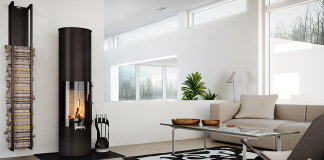

There’s a particular kind of living room that photographs beautifully and feels slightly wrong to actually be in. The cushions have clearly been arranged rather than sat against. Nothing has been left on the coffee table. The throw is folded with a precision that suggests removing it would constitute a small act of vandalism. It’s lovely, and it’s unwelcoming.
The opposite situation is equally common. Genuinely comfortable — soft, warm, easy to settle into — but without any sense of intention. Good pieces that don’t quite add up to a room.
What follows is about the space between those two. How a living room can feel both considered and casual at the same time.
Figure Out What the Room Is Actually For
Before colour, before furniture, before anything aesthetic: what does this room mainly do?
A room used primarily for quiet reading and evenings alone has different requirements from one that needs to seat eight for a dinner party overflow, or work as a family space for the next decade, including small children and a dog. The seating arrangement, the focal point, the amount of circulation space — all of these decisions follow from the room’s real purpose, not from what looks good in photos.
Style decisions become much easier when they have a function to serve. Start there.
The Composition Matters More Than Individual Pieces
One of the most reliable living-room mistakes is falling in love with individual things that don’t work together. A beautiful sofa in the wrong scale for the room. A rug that sits under only the front legs of the seating. Curtains in the right colour but hanging from the wrong height. Each choice is reasonable on its own. Together, something’s off.
A polished living room is a result of choices working in relationship with each other, not a collection of good purchases. The sofa scale relative to the rug size. The ceiling height relative to the curtain drop. The light sources in relation to the wall colour. These need to be thought about together rather than in sequence.
When a living room includes several connected decisions – furniture scale, colour palette, lighting, storage, and decorative balance – 3D rendering services for interior design can help teams or homeowners review the overall direction before the space is finalised. The point is seeing the composition as a whole before things are ordered and installed, so that you can still change your mind.
Give the Eye Somewhere to Go
Every room that feels resolved has something the eye goes to first. A fireplace is the obvious answer, and it works – it gives the seating a natural orientation and the room an organising principle. It can equally be a substantial piece of artwork, a wall of shelving, a window with a view worth framing, or a light fitting significant enough to read as a feature.
The problem is competing focal points. A large artwork on one wall, a television on another, an elaborate shelving arrangement on a third: the eye doesn’t settle anywhere, and the room ends up feeling restless regardless of how good each element is individually.
One thing leads. Everything else supports it.
Comfort Is Spatial, Not Just Soft
Most people think of comfort in a living room as a question of upholstery and cushions. It’s more than that.
A sofa that’s technically large but proportionally wrong for the room doesn’t feel more comfortable – it feels cramped. Side tables positioned too far from the seating for easy reach. A rug that floats in the middle of the seating area rather than anchoring it. Chairs were arranged for the room’s geometry rather than for actual conversation. These spatial decisions are what make a room genuinely easy to be in. They’re less visible than the colour palette and less photogenic than the accessories. They’re what people feel when they sit down.
Getting the proportions right — the sofa-to-room ratio, the rug size, the clearance for movement — is the foundation everything else sits on.
One Room, Many Possible Versions of Polished
Polished living rooms don’t look the same as each other. Some are almost spare — contemporary, light, where the quality is in what’s been left out. Some are warm and deeply layered, with rich colours and accumulated texture. Some are formal and symmetrical. Some are coastal and low-key, or traditionally English and faded in a deliberate way.
A living room render can also be a useful reference when comparing how very different design choices shape mood — from airy contemporary spaces and warm chalet interiors to more formal or traditional compositions. Seeing the same room type interpreted in dramatically different ways is a useful reminder that “polished” is not a specific aesthetic. It’s a quality of intention that can be achieved through many different visual languages.
Lighting Is What Makes It Feel Finished
This tends to be addressed last, which is why so many living rooms feel slightly flat after dark.
A single overhead light, even a good one, flattens a room. What makes a living room warm in the evening is light at different heights: a floor lamp in a corner, table lamps at either end of the sofa, possibly a wall light. Warm-toned bulbs. Light sources that create pools rather than uniform coverage.
This is one of the highest-impact changes you can make to an existing room. Swapping out a ceiling-only setup for a mix of lamp sources costs very little and shifts a room from functional to genuinely pleasant to be in after 6pm.
Neutral Doesn’t Mean Characterless
A neutral palette is a very good starting point for a living room. Calm, flexible, easy to live with. It photographs well. It works across seasons.
Its weakness is that it can feel blank without enough texture and personality layered through it. Smooth neutral upholstery, plain walls, minimal accessories: starts to feel like the waiting room of a very tasteful establishment rather than somewhere to actually spend an evening.
What counteracts this: a textured rug with some weight to it. Artwork that means something. Something in timber — a coffee table, a side table, floating shelves. Plants at different heights. Cushions in different weights and surface qualities. None of this needs to be expensive. It needs to be considered and genuinely chosen, which is different from purchased for the purpose of filling a room.
Storage Is Part of the Design
Living rooms that stay looking polished in daily life almost always have adequate storage. Not necessarily elaborate or visible storage — but somewhere things can go so they don’t accumulate on surfaces.
Built-ins are the most complete solution. A sideboard or media unit can do the same job with less commitment. Open shelving works when it’s maintained and doesn’t work when it isn’t. Baskets, ottomans with internal storage, drawers within coffee tables — the specific approach matters less than the fact of having enough capacity for the room to absorb ordinary daily use without looking like it.
A room with nowhere to put books, remotes, or anything brought into it will never look resolved, regardless of how well everything else has been chosen.
The Most Elegant Rooms Look Like Someone Lives In Them
A polished room and an impersonal one are different things, and it’s worth being clear about the difference.
A book stack that reflects actual reading. Art chosen rather than placed for scale. A plant that has been cared for. Something from somewhere, brought back and put on a shelf. A textile with a history. These are small contributions but they shift the room from a composed interior to someone’s home, which is the more interesting of the two.
The rooms worth spending time in feel like they were thought through and then actually inhabited. Both things. Not one at the expense of the other.