
Staring at Marilyn Monroe’s crypt at the Pierce Brothers Westwood Village Memorial Park in Los Angeles evokes a surreal feeling. It is difficult for me to reconcile the vivacity of her life with the finality of her death – a sudden realisation that deepens as I sit before the cold marble bearing her name.
2026 marks the centenary of Monroe’s birth. This milestone has done something remarkable: it is fundamentally rewriting her legacy. The circumstances and conspiracy theories surrounding her sudden death in 1962 cemented a narrative of an ill-fated woman destroyed by Hollywood, diminishing her extraordinary career to little more than a tormented bombshell.
In reality Monroe was the skillful architect of her own enduring image. A strategic thinker who controlled her fame; collaborating with photographers, staging photo opps, and insisting on approval of images – decisions which allowed her to outshine most stars in the Golden Age of Hollywood. 64 years after her death, the likeness she controlled has generated US$ 80 million, since 2011, for Authentic Brand Group which owns Monroe’s intellectual property.
Marilyn in Santa Monica
Walking out to find echoes of her past in Santa Monica, I stepped out of The Georgian Hotel – a legendary haunt for Hollywood’s past and present greats – realising that for Monroe, Santa Monica was not just a location; it was a place where her career catapulted, and also where she may have found rare moments of peace at the height of her fame. Folklore says her spirit never left these shores; locals speak of a legend where her ghost visits Santa Monica Pier.
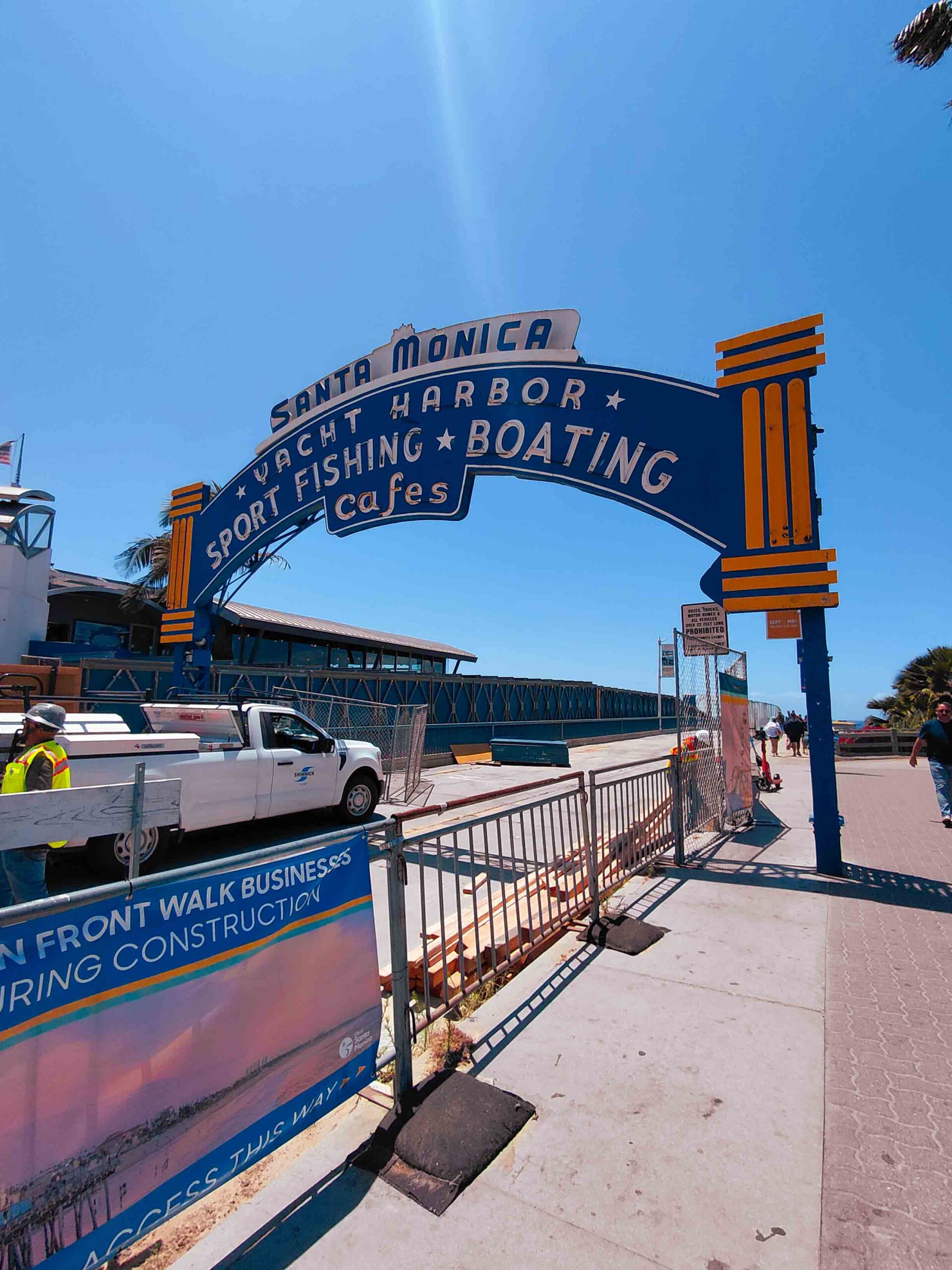
I crossed over the road to meet Jeff Wynne, tour guide with the Santa Monica Pier Corporation, under one of the most photographed signs in the world – the Yacht Harbour Sign. Wynne tweaked their 1 hour tour – A Walk Through Pier History – for me to explore Monroe hangouts.
“Let’s start with the Looff Hippodrome. There’s a Marilyn connection here,” suggested Wynne as we walked over the bridge and turned left into the salmon pink building. I couldn’t help notice how the sun bounced off the glossy marine blue window frames. We used a side door and walked into an enormous hall with a carousel in the middle.
“There’s a story from the early 60s that Jockey Stevens, the carousel operator, had noticed a woman wearing a big coat and dark glasses, sitting in a corner, staring at the carousel. She’d been spotted over the stretch of a few weeks. Then one day, Stevens went up to her and asked why she sat there every day, and if she didn’t have a job she should be at.
“I do have a job,” said the stranger, sweeping off her glasses. “I am Marilyn Monroe’.”
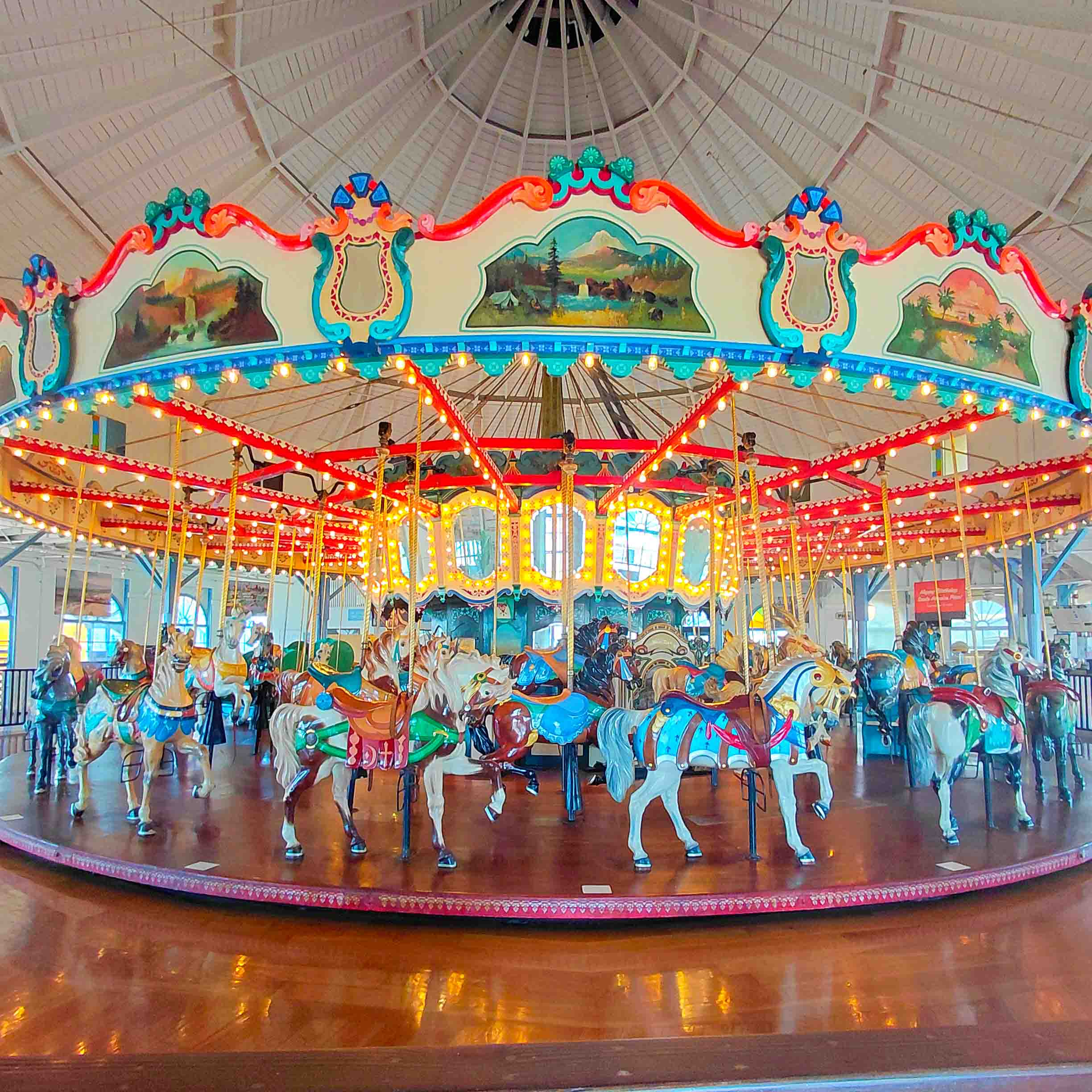
If the story is true, I figured that her spirit would return, Wuthering Heights style, to watch the carousel. Inside, the walls are white but the brightly painted carousel has mirrored circus lights around the centre, lighting it from within, giving it an ethereal feel – like a chariot on a cloud.
As it turned, I watched from a corner, as Monroe might have done, and understood why she may have sat here for hours; the longer I stayed the more it drew me like a doorway to Narnia.
However, we didn’t have hours to spare. Heading out of the Hippodrome we walked to the reality of heavy traffic on Ocean Drive, Wynne pointed to a ramshackle bar over the road.
“Do you know about Chez Jay ?” he asked.
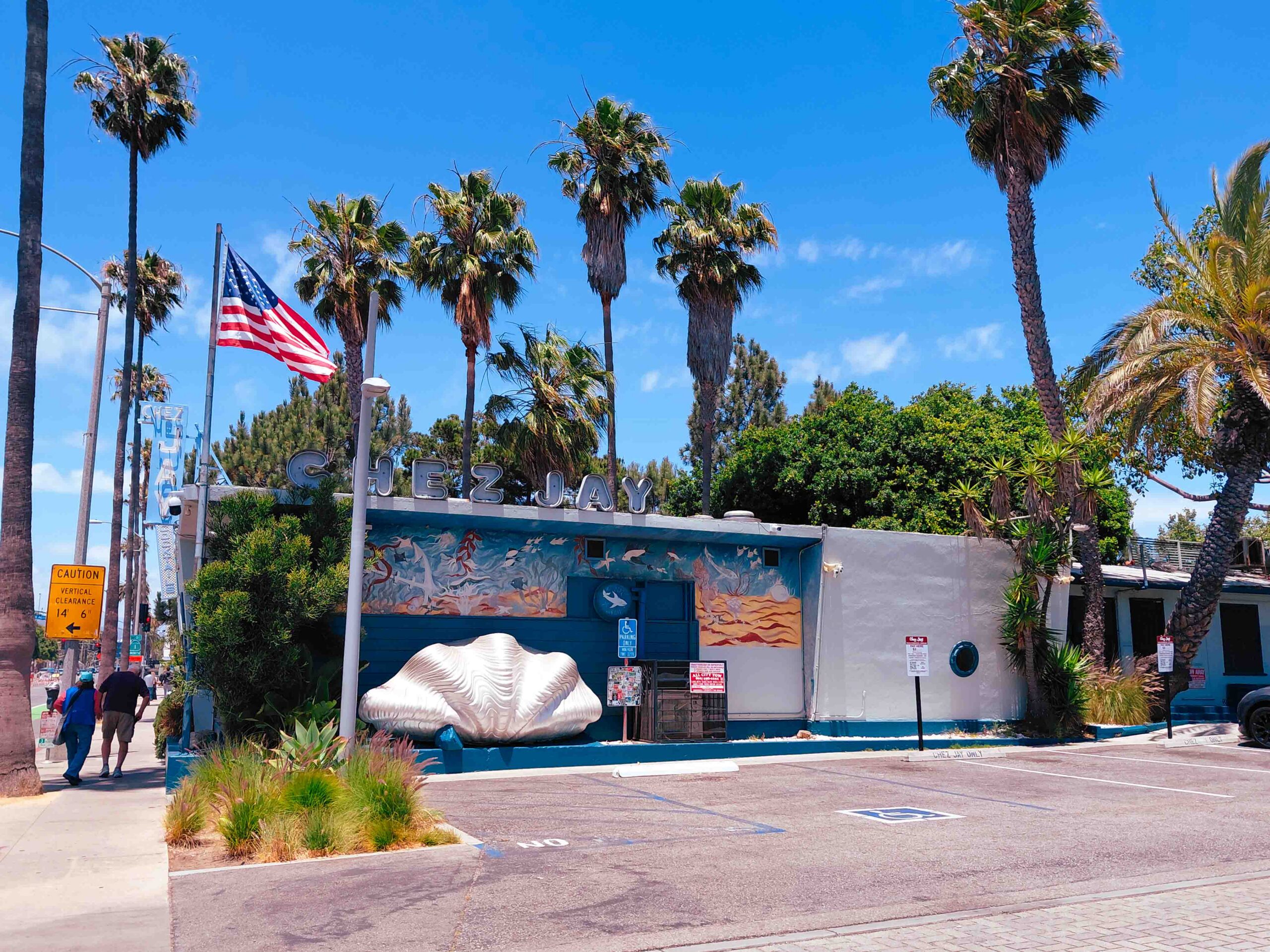
I shook my head. From where I stood it looked like a run-down dive bar. But as we crossed over I noticed the nautical theme on one side. Individual blue neon letters on the edge of the flat roof of the single-storey building spelt out its name. Underneath, the wall was covered in a long underwater mural, and on the ground was an enormous fan-shaped sea shell.
“It was a Rat Pack bar. They used to drink here. The story is that Marilyn came with them because they were all friends,” Wynne adds.
Chez Jay was opened by actor Jay Fiondella in 1959. The stars flocked here because Fiondella protected their privacy by not allowing photographs inside. 67 years later, it remains popular – gaining Santa Monica Historic Landmark status in 2012.
After I’d taken a few photographs outside we zig-zagged back to the beach walking parallel to Ocean Drive, heading southward, and made our way to Hotel Casa Del Mar. In 1952 at 25 years of age, with only a handful of minor roles behind her, Monroe collected her first Golden Globe award for Best Young Box Office Personality in the ballroom of this hotel. (She went on to win 2 more for popularity and another for her performance in Some Like it Hot.)
I bid Wynne goodbye and walked into Hotel Casa Del Mar for lunch, and found a table by one the enormous windows. In the early days hundreds of private members of Club Casa Del Mar would have sat under umbrellas on the sand outside, but now, apart from a passer-by, it was empty. To my right, in the distance, I could see Santa Monica Mountains cast their shadow.

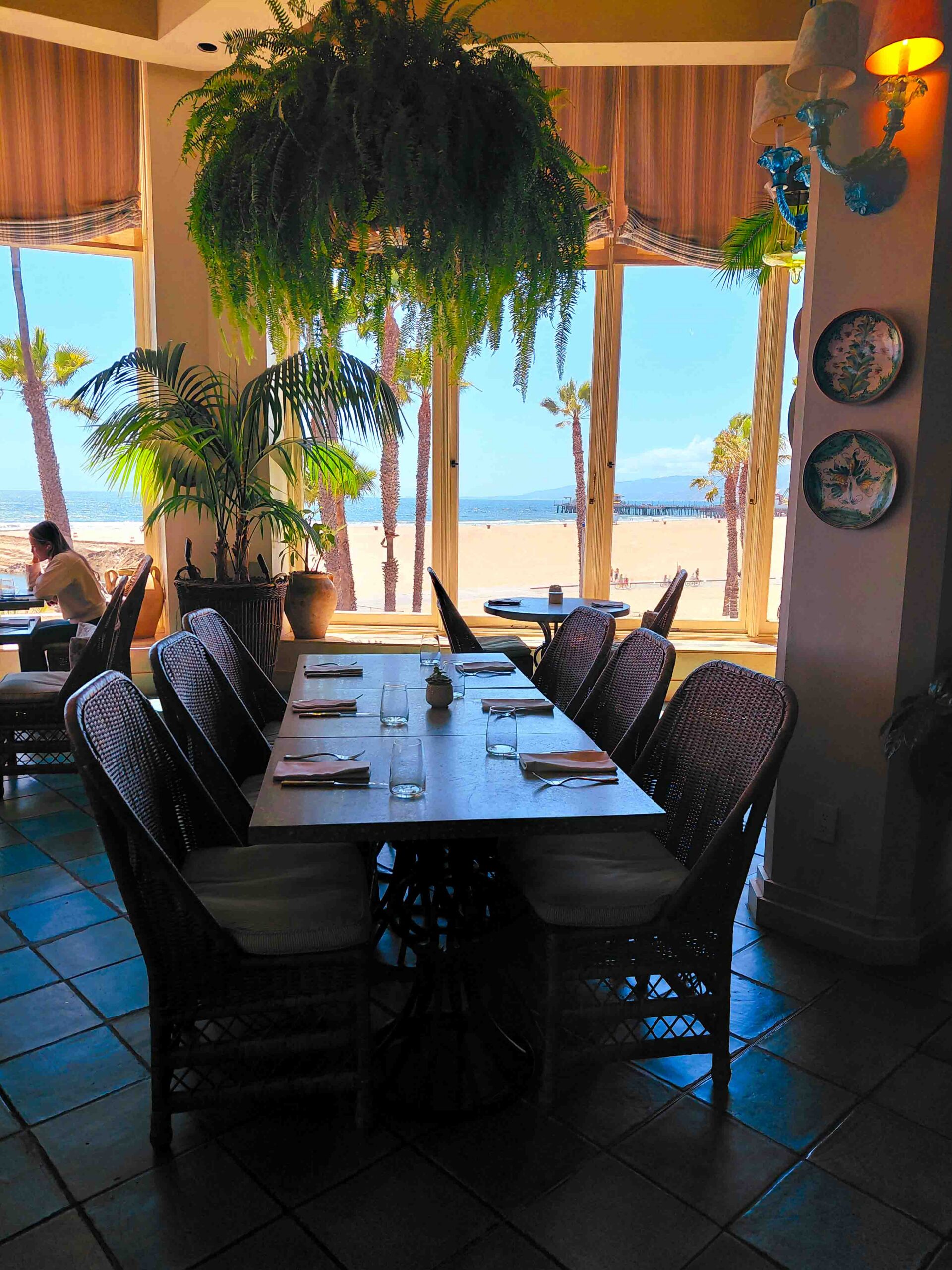
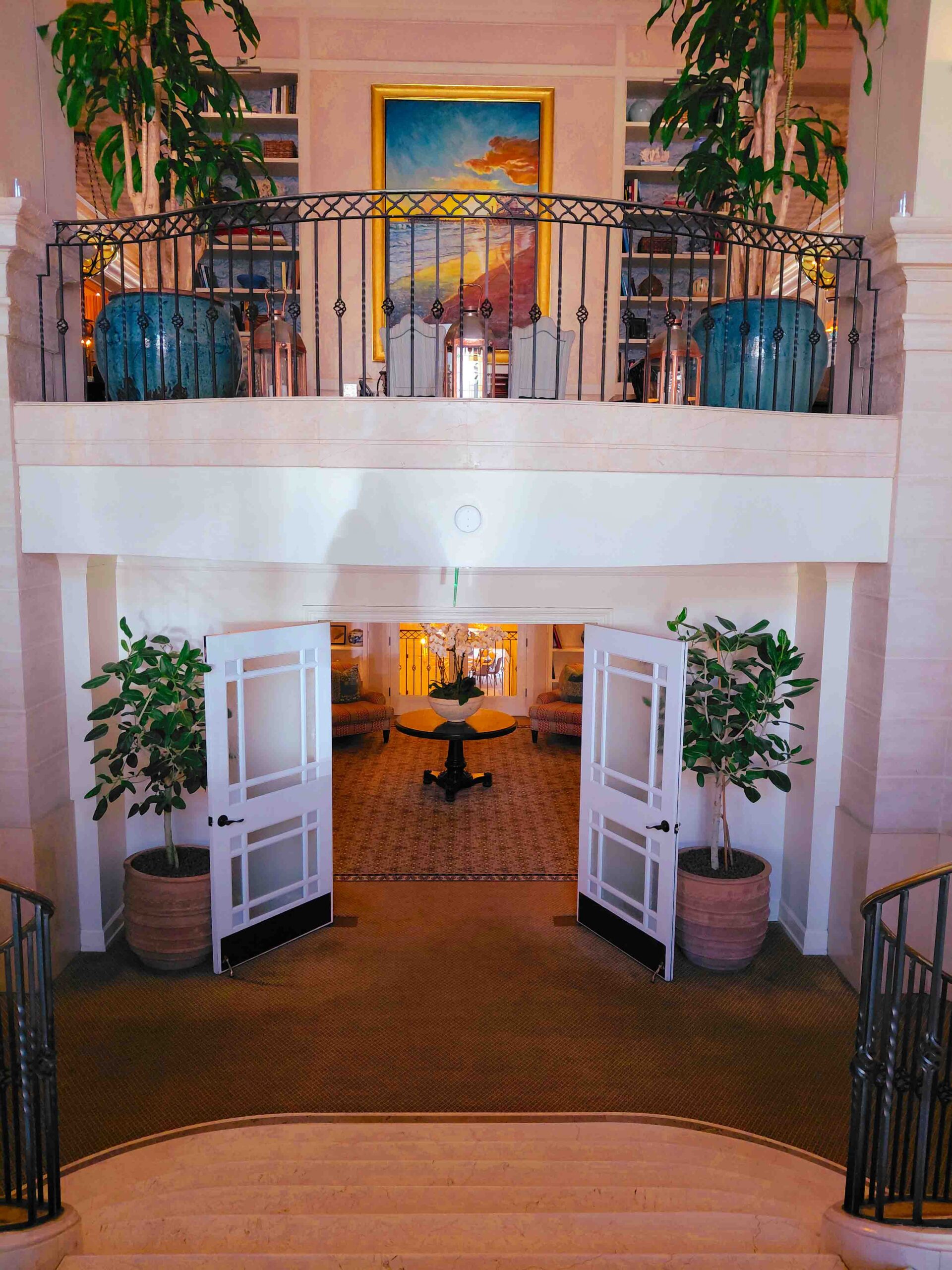
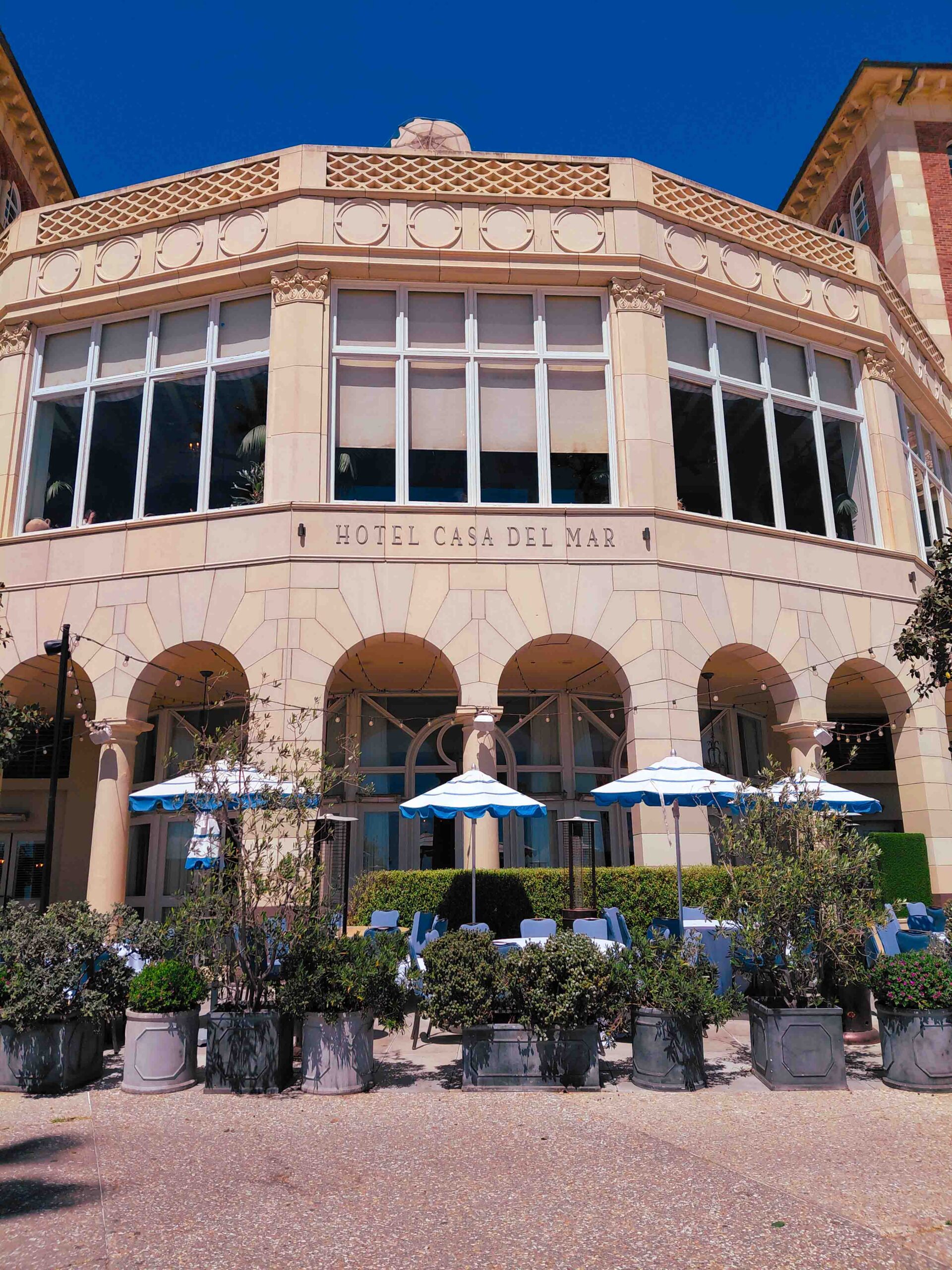
The ballroom which hosted the Golden Globes, known then as the Henriettas, was directly beneath and closed for a private event. I assured myself that Monroe would have seen the same view.
With one more Monroe memory to tick off I set out for the Pacific Palisades after lunch. It was an idyllic Santa Monica afternoon for a walk; deep blue skies, and palm trees swaying in the sea breeze.
George Barris photographed Monroe on the beach of Pacific Palisades in the summer of 1962. The pictures, showing Santa Monica Pier in the background, would turn out to be her last. By judging the distance of the pier in Barris’ pictures it was easy enough to find the stretch of beach that was, perhaps, one of Monroe’s last happy places. As I stood on the beach I looked at Monroe’s beaming face on my phone – her hair untidy from the wind, frolicking in the waves like the hardcore California girl she remained til the end.
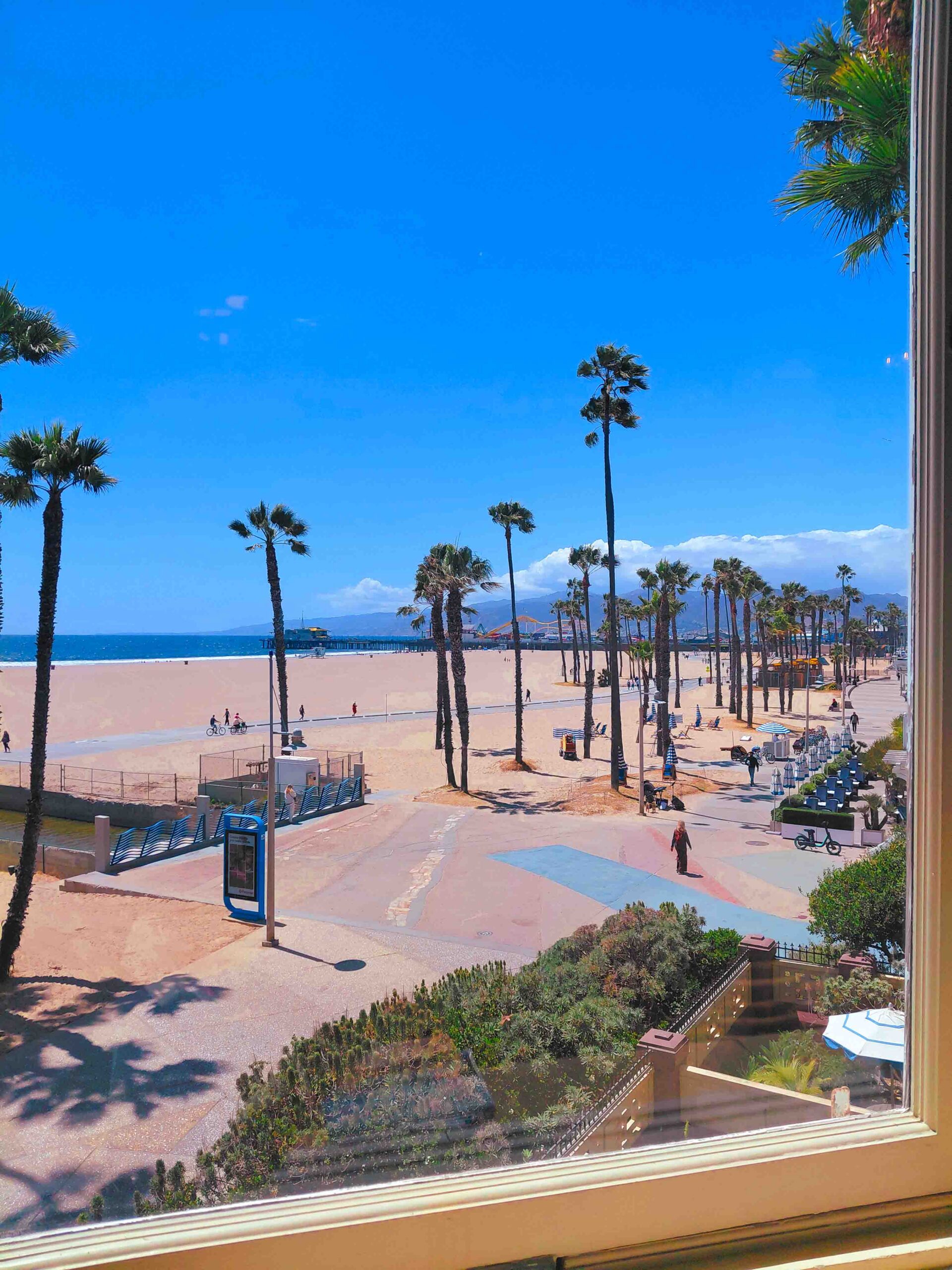
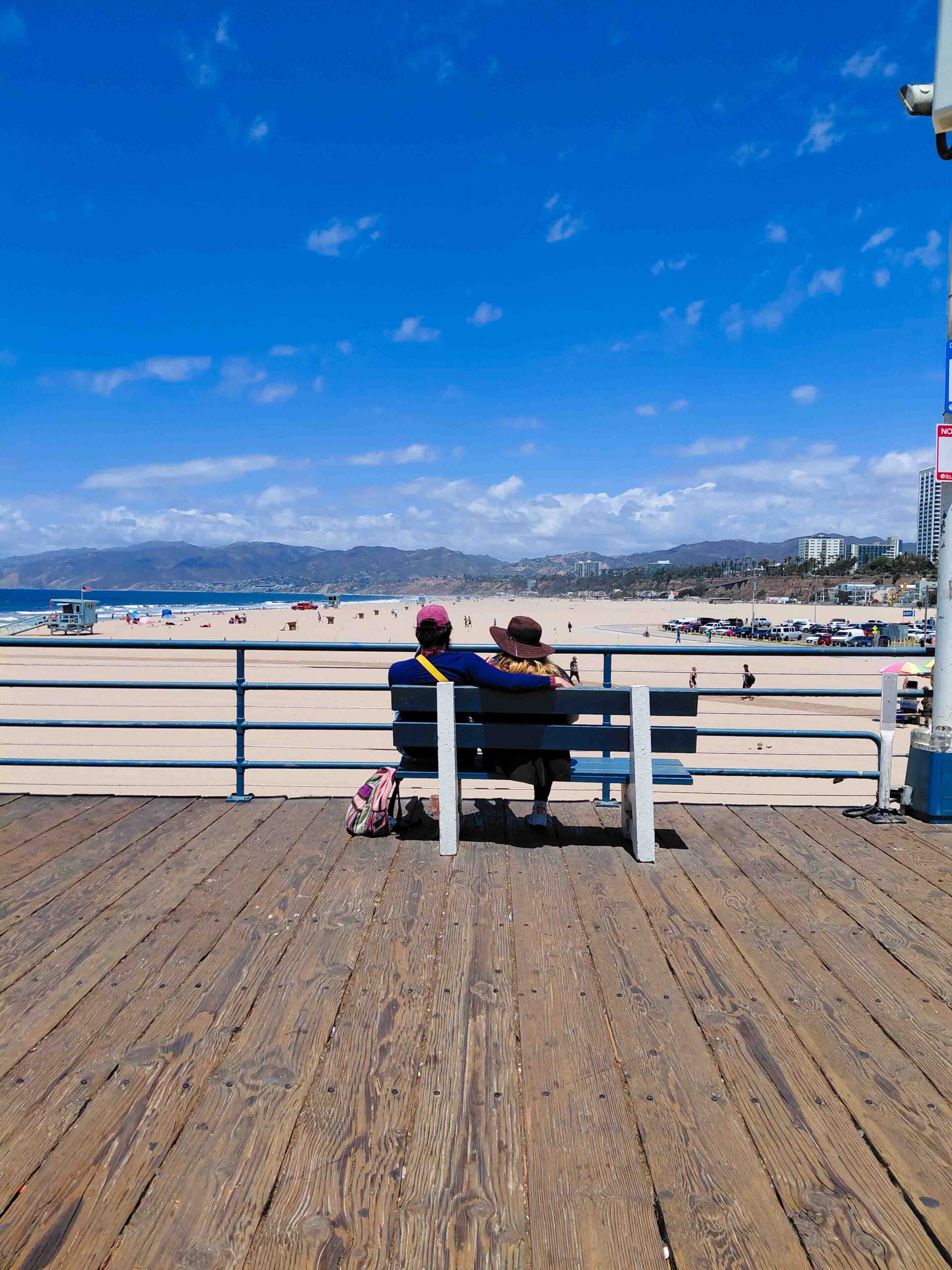
I walked back along the beach towards Santa Monica Pier at a snail’s pace. I was trying to figure out what to write about a woman whose legacy has endured for 100 years. To tell the story of her triumphant life there was only one thing to do; omit anything about her that was said by men who hijacked her name to settle political scores.
Monroe was far ahead of the game. She created a low common denominator, onscreen hetero-male fantasy: glossy lips, swinging hips, and a fake squeaky voice – a mere tactic that must never be confused with the person who fought for agency in her career by taking on Hollywood’s powerful studios, and won. She went against the grain and confronted predators in Hollywood, demanded equal pay, was politically active, and set up her own production company – Marilyn Monroe Productions.
What’s refreshing about the majority of centennial celebrations around the world which include two British cultural institutions – the British Film Institution, and The National Portrait Gallery – is that they refuse the endless commodification of her image, and instead acknowledge her work, and the complex characters she fought to portray.
So Marilyn, if you are with us in spirit, it might be 100 years late, but we have finally set the record straight.