
In the world of dining out, there has long been a standard “contract” between the diner and the kitchen: you order your dish, I order mine, and we each defend our culinary territory until the plates are cleared. It is a transactional, individualistic approach to eating that, while efficient, often misses the point of gathering in the first place.
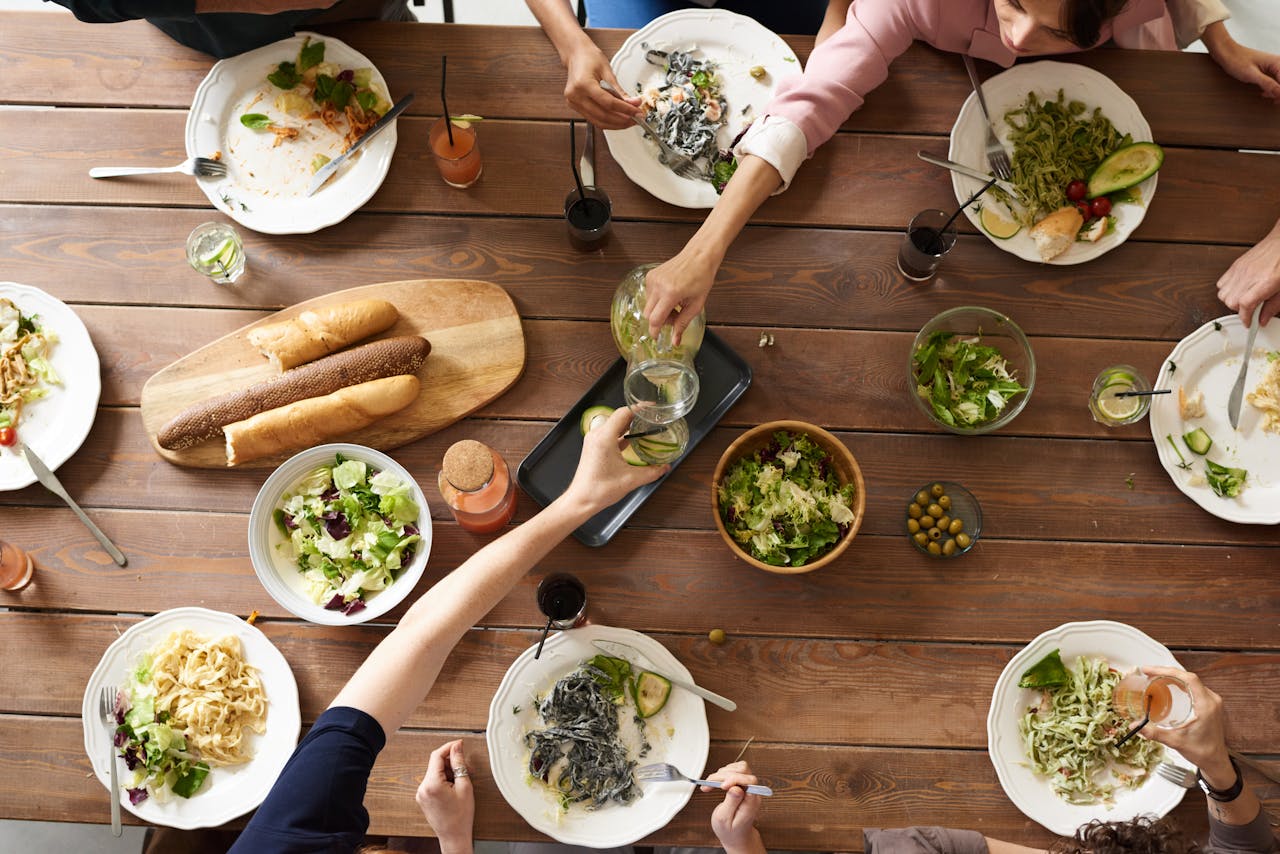
However, a shift is occurring in how we approach group dining. More and more, we are seeing a return to the communal table—a style of eating where the “my plate” mentality is replaced by “our table.” This shift toward shared plates, mezze-style spreads, and family-style service is doing more than just changing our menus; it is fundamentally altering the social chemistry of our friendships and celebrations.
The Psychological Shift: From “Me” to “Us”
When you sit down to a meal where everyone has their own isolated plate, the social interaction is largely restricted to conversation. But when you introduce shared dishes, the meal itself becomes an interactive, physical event.
Sharing food requires communication, negotiation, and a heightened awareness of others. You find yourself asking, “Have you tried the roasted carrots yet?” or “Should we order another round of the spicy prawns?” This constant, low-stakes collaboration breaks down social barriers. It forces a level of intimacy that a standard three-course meal rarely achieves. In psychological terms, it moves the group from a collection of individuals eating in proximity to a cohesive unit engaged in a shared experience.
The Cultural Roots of the Shared Table
The concept of the communal feast is anything but new. In fact, the Western obsession with individual portions is the historical outlier. Across the globe, some of the most enduring social cultures are built entirely around shared dining:
● The Levantine Mezze: A spread of dozens of small dishes that encourage hours of lingering and conversation.
● Spanish Tapas: A tradition designed for movement and social fluidity.
● Chinese Dim Sum: A revolving door of flavors that requires the group to constantly interact with the center of the table.
These cultures recognize that food is a vehicle for connection. When the food is placed in the center, the focus of the room shifts. The center of the table becomes the stage, and the diners are the audience and the actors all at once.
Designing the Experience: The Venue Factor
Not every dining space is built for this level of interaction. Achieving the perfect communal vibe requires a specific environment. When families or large circles of friends are looking for a restaurant for large groups, they are often searching for more than just a high chair count; they are looking for an atmosphere that facilitates flow.
A space designed for communal dining usually features long, expansive tables or round booths that allow everyone to see each other. It requires a service style that understands the “pacing” of a shared meal—bringing dishes out as they are ready rather than in rigid, timed courses. In these environments, the clinking of glasses and the passing of platters create a “white noise” of conviviality that makes even the most reserved guest feel comfortable joining the fray.
Navigating the “Shared Plate” Etiquette
While the communal table is inherently more relaxed, it does require a bit of social grace to ensure everyone leaves satisfied. For a successful group outing, a few modern rules of thumb apply:
1. The “Dietary Liaison”
In every group, there is likely someone with a dietary restriction. A successful shared meal begins with acknowledging these early. Ordering a few “safe” dishes that everyone can enjoy ensures that no one feels like an afterthought while the rest of the table dives into a specific platter.
2. The “Last Bite” Rule
We have all experienced the awkwardness of the single remaining dumpling or the final slice of bruschetta. The communal table thrives on generosity. The rule is simple: always offer the last piece to the group before taking it yourself. It’s a small gesture that reinforces the spirit of the gathering.
3. Simplify the Bill
Nothing kills the “communal high” faster than twenty minutes spent squinting at a receipt and calculating who had the extra soda. The best approach for shared dining is to agree beforehand to split the bill equally. This keeps the focus on the experience rather than the math.
The Health of the Group
There is also a hidden health benefit to shared dining. When we eat family-style, we tend to eat more slowly. We talk more, we pause between bites to pass a dish, and we are more mindful of our fullness because the meal isn’t a “race to the finish” of a single large plate. This “slow food” approach is better for digestion and ensures that the evening is defined by the quality of the time spent, not just the quantity of food consumed.
The Table as a Bridge
At its heart, the return to shared plates is a rebellion against the isolation of modern life. In a world where we spend so much time behind individual screens, the communal table offers a rare moment of genuine, physical collectivity.
Whether it’s a birthday, an anniversary, or just a Tuesday night with friends, choosing to share a meal is a choice to be present with one another. It turns a simple dinner into a collaborative event, a memory-maker, and a social catalyst. So, the next time you find yourself out with a group, skip the individual entrees. Reach for the center of the table, pass the bread, and let the shared plates do the work of bringing you closer together.